

Powering the Future: How Economic Developers Are Navigating the Growing Energy Tug-of-War Between Manufacturing and AI
12 Mar 2026
Economic development has always been about aligning assets with opportunity. Developers in search of new investment must ensure they have the land, workforce, infrastructure, and incentives in place to support the development they hope to attract.
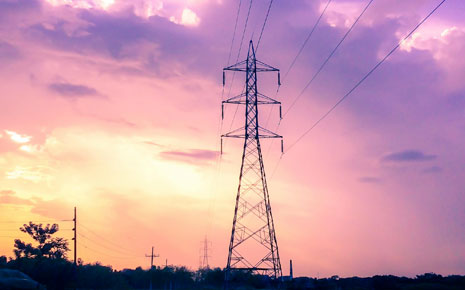
Today, a new asset is quietly becoming the deciding factor in many growth decisions: energy capacity.
Across the country, communities face a mounting tension between two powerful economic forces. Manufacturing expansion and AI-driven data infrastructure are both high-profile development projects, and both demand enormous amounts of electricity. Manufacturing accounted for 76% of all energy consumption among the four major industrial categories. And data centers alone account for roughly 2% of U.S. energy consumption. The challenge, then, is not simply meeting demand, but deciding how to allocate limited energy resources and plan for future energy growth in a way that supports long-term economic goals.
Two Growth Engines, One Finite Energy Resource
Manufacturing — particularly advanced, clean, and reshoring-driven manufacturing — relies on stable, predictable baseload power. Energy costs factor directly into operating margins, while reliability influences everything from equipment lifespan to production schedules. For many manufacturers, power availability is not a secondary consideration; it is a go/no-go requirement.
At the same time, AI and data-intensive facilities are rapidly reshaping the energy landscape. These projects often consume 10 to 50 times more energy than an office building of the same floor space. They also develop on faster timelines than traditional projects, prioritize redundancy and immediate access to power, and consume far more energy than manufacturing per job created.
Data center growth shows no signs of flowing – one estimate projects power demand from these facilities will grow by 50% by 2027 – and utilities and communities are quickly discovering that AI demand can absorb available capacity faster than grids can expand, creating a real risk of crowding out job-rich projects.
For any development, “you need people, you need product, like a site, and you need power. And power is becoming more and more important,” said Hugh McDonald, Arkansas Secretary of Commerce, whose state recently received a $4 billion investment from Google for construction of a data center. “You’re hearing that everywhere you go, especially with the rise of AI and the need for more data centers.”
As a result, planning for future growth will require understanding the potential power demands of any likely development.
The Economic Development Dilemma
The convergence of manufacturing and data centers forces developers to address some uncomfortable but necessary questions: Should scarce power be allocated to projects that create the most jobs, or the largest tax base? How can communities put plans in place to avoid a “first come, first served” approach that limits future opportunity? And, crucially, what happens when a community’s power is fully committed before its long-term strategy is realized?
Historically, energy planning has been treated as a technical function handled by utilities. Increasingly, however, it is becoming a strategic economic development decision that requires coordination across state, regional, and local levels. As a result, forward-thinking economic developers are beginning to treat power the same way they treat land and workforce: intentionally and strategically.
This shift includes:
- Aligning energy planning with target industries;
- Evaluating projects based on economic return per megawatt;
- Coordinating earlier and more deeply with utility partners; and
- Exploring phased power delivery, on-site generation, and storage solutions.
The goal is not to reject AI or data infrastructure, but to ensure these projects fit within a broader economic vision, rather than define that vision all on their own.
“If you don’t have energy, you don’t have an economic development policy or strategy,” McDonald said.
Why The Energy Conversation Can’t Wait
Growth in both of these sectors is primed to continue for the foreseeable future. The pace of AI investment – one of the major drivers of growing data center demand– shows no sign of slowing. Meanwhile, manufacturing reshoring and domestic supply chain resilience depend on dependable energy access. Communities that delay hard conversations risk being unprepared for the opportunities that await. That may result in losing manufacturing projects to better-prepared regions, but it may also mean overcommitting power to low-employment uses and facing political and public backlash over rising energy costs
Economic development is no longer just about attraction — it’s about allocation.
The Energy Opportunity for Economic Developers
Successfully navigating this moment will require communications planning that engages utilities, policymakers, and business leaders to establish clear priorities before capacity is exhausted. It will also require ensuring that energy strategy is transparent for site selectors and investors.
This is not a challenge any one organization can solve alone. Rather, it is an opportunity for economic development leaders to step in and provide support by convening the right voices, asking the right questions, and shaping what comes next.
Golden Shovel is hosting a panel of community and energy leaders to discuss the pressing issue of how to increase energy capacity to support manufacturing, AI and housing development — and how to communicate properly with stakeholders. Register for this FREE webinar here.
More Topics
The Aviation Disruption Is Already Here — And Communities That Hesitate Will Be Left Behind
Feb 26 2026
Best Economic Development Websites for 2026
Feb 24 2026
Featured Work: Government
Devils Lake, ND
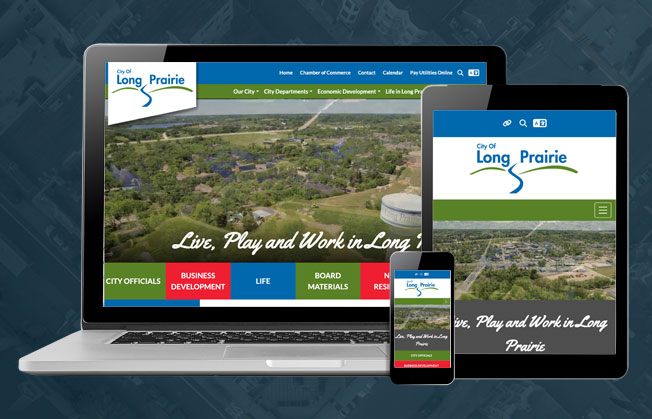
Long Prairie, MN
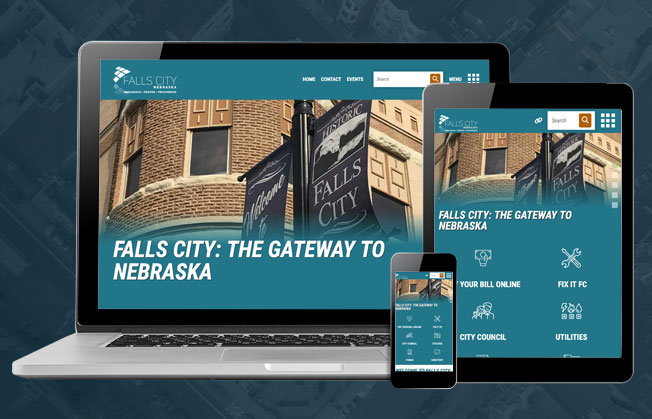
City of Falls City, NE
Get The Economic Developer's Edge Right To Your Inbox